
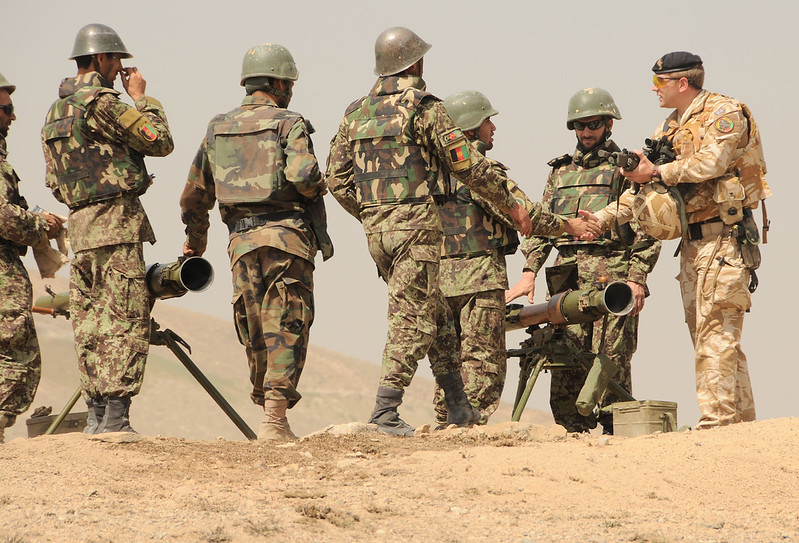
Darulaman, Afghanistan (September 2, 2010)
Zarah Sultana has come in for some stick lately for advocating Britain’s withdrawal from NATO “because it is an imperialist war machine.” Citing Iraq, Libya and Afghanistan, she said: “If we look at NATO’s track record, (its) endless wars have made the world less safe.” Centrists confined their abuse to calling Sultana “a crank”, “infantile”, “delusional” and, of course “a Russian asset.” Others piled in with predictably racist attacks.
While many more people liked and expressed support for her view, the hostility from supporters of the status quo was as unsurprising as it was pathetic. NATO has long been the sacred cow of British politics. For Labour right-wingers, allegiance to the Cold War military bloc formed in 1949 has been of defining importance, even after the reasons for its existence disappeared with the demise of Soviet Union. It is enshrined in the constitution of Labour First, one of the main anti-Corbyn right wing groups, and Keir Starmer has made fealty to NATO a condition for retaining the Labour whip.
NATO’s proponents claim it was created by the original twelve members “to guard their freedom”, conveniently overlooking the fact that one of the founders, Portugal, was ruled by an openly fascist regime that was not overthrown until 1974. In its first round of enlargement in 1952, NATO admitted Greece, which it did not expel when it was ruled by a military junta from 1967 to 1974, and Turkey, which invaded Cyprus in 1974 and still controls a third of the island.
The 1980s saw opposition to NATO membership become a mass movement. US plans to deploy cruise missiles at its bases in Britain were met by huge protests, including the long-running peace camp at Greenham Common. In 1983, CND adopted a policy of campaigning for withdrawal from NATO. Two years later, when delivering a lecture in Sheffield, Tony Benn challenged the basic assumptions that had underpinned the Cold War and called for Labour to “come forward with a fresh policy statement designed to prepare the way for withdrawal from NATO.”
Events overtook that developing debate, however. The Soviet-led Warsaw Pact, which had been formed in 1955 after West Germany joined NATO, was disbanded in February 1991 and the Soviet Union itself was dissolved at the end of that year. Many people assumed at the time that the danger of war had receded, but this was based on a misunderstanding of its main source.
During the Cold War, the US, Britain and other imperialist powers had conducted wars independently or in mini-combinations. Britain was mainly concerned with defeating national liberation movements in its colonies, as in Malaya, Kenya, Cyprus and Yemen. The US was asserting itself where the old colonial powers were retreating, notably in Vietnam. NATO, meanwhile, confined its operations to Europe and did not have to fire a shot in anger because the Soviet invasion we were constantly told was imminent never happened. With its claimed raison d’être gone, NATO should have been wound up. But Washington clearly saw a value in using it as a vehicle to expand into eastern Europe and for embroiling allies in regime-change wars in the Global South.
Sultana was accused by her attackers of being ignorant of the history. One claimed Afghanistan was “a defensive war.” Another said NATO had “not started one war” and had “ended the war in Libya.” So, let’s take a brief look at her three examples.
Afghanistan – The day after 9/11, President Bush invoked Article 5 of the NATO constitution deeming it to be “an attack against them all” and requiring each NATO member state to take “such action as it deems necessary, including the use of armed force.” The invasion of Afghanistan that followed in October 2001 was US-led with the UK joining from the outset. All the major NATO powers were soon involved, and it became a fully-fledged NATO operation from 2003. The Bush administration claimed it had to invade because the Afghan government refused to hand over Osama bin Laden, but this was a cynical pretext for a war to oust the Taliban and instal a pro-American regime. Bin Laden somehow evaded the world’s most powerful military machine and was not killed until ten years later. NATO then continued the war for another ten years, making it the longest conflict in US history. According to the Watson Institute at Brown University, 43,074 civilianswere killed in the war (nearly four times as many as the UN currently estimates Russian forces have killed in Ukraine).
Libya – The NATO justification for intervening in Libya in 2011 was the protection civilians from the government of Muammar Gaddafi, which was fighting an insurgency in the east of the country. However, in 2015, a UK Parliamentary inquiry found that “the threat to civilians was overstated” and that the intervention “had drifted into an opportunist policy of regime change.” NATO aircraft flew 9,700 strike sorties over Libya during the 7-month campaign. It claims to have struck only military targets, but a UN investigation in March 2012 of just twenty of the NATO strikes found that 60 civilians had been killed in five of them. Of four of those five, the investigators found “no physical evidence” of their military value. If that sample is typical, the number of civilian deaths would run to thousands if not tens of thousands. We may never find out the true figure because the NATO powers have refused to accept responsibility for the harm they caused.
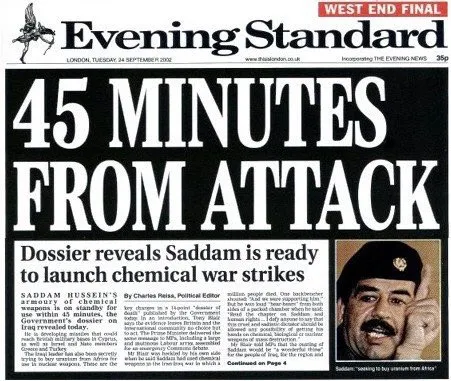
Iraq – Unlike Afghanistan and Libya, the invasion of Iraq in 2003 was not a NATO operation because France and other members declined to take part. The pretext for the US and UK launching a war to overthrow Saddam Hussain was the entirely spurious claim that he possessed weapons of mass destruction and that they could reach London in 45 minutes. Civilian deaths since the invasion are in the range 187,499 to 211,046, according to Iraq Body Count, verified by the Watson Institute. In January 2020, Iraq’s parliament passed a resolution calling on the Iraqi government “to end the presence of any foreign troops on Iraqi soil and prohibit them from using its land, airspace or water for any reason,” but Washington refused to withdraw its remaining 5,200-strong force. It has since scaled troop numbers back but mainly by transferring them to Syria to reinforce US forces involved in supporting the overthrow of President Assad by, ironically, Islamist rebels.
Sultana may have been wrong in attributing Iraq to NATO – rather than its two most war-hungry members – but she is absolutely right in saying these endless wars have made us less safe. They have fuelled hatred of the West, destabilised an entire region and displaced 37 million people, creating a refugee crisis that is now being exploited by the far right in NATO countries.
But it gets worse: Israel and NATO are partners. Despite Israel’s ongoing illegal occupation of Palestinian territory, it has been a NATO partner since 1994 and opened an office for its ambassador to NATO at the alliance’s headquarters in Brussels in 2016. That development was linked to Israel joining Operation Sea Guardian, under which some Israeli naval forces receive their orders from NATO’s marine command based at Northwood in London. These arrangements – like the supply of weapons from most NATO countries – have continued uninterrupted throughout Israel’s genocide in Gaza.
Why would any self-respecting socialist want to be part of a military bloc that has so much blood on its hands? Why would anyone – socialist or otherwise – want to entrust Britain’s security to a bloc dominated by people who are so carefree about the wars they start?
This is not a zero-sum game. Being outside NATO, as Ireland and Austria are, does not imply endorsement of the actions of Russia or any other country. But it does involve being willing to take an independent view and recognising that peace comes through dialogue between opposing forces and measures to build trust and security. It also involves being resilient to the attacks that peace-mongers inevitably have to face.
Zarah Sultana has been accused of being “childish” by advocating withdrawal from NATO, but there is nothing “grown up” about supporting endless wars that have claimed the lives of literally hundreds of thousands of innocent civilians.
Source: The Rest is Bullshit, Substack