
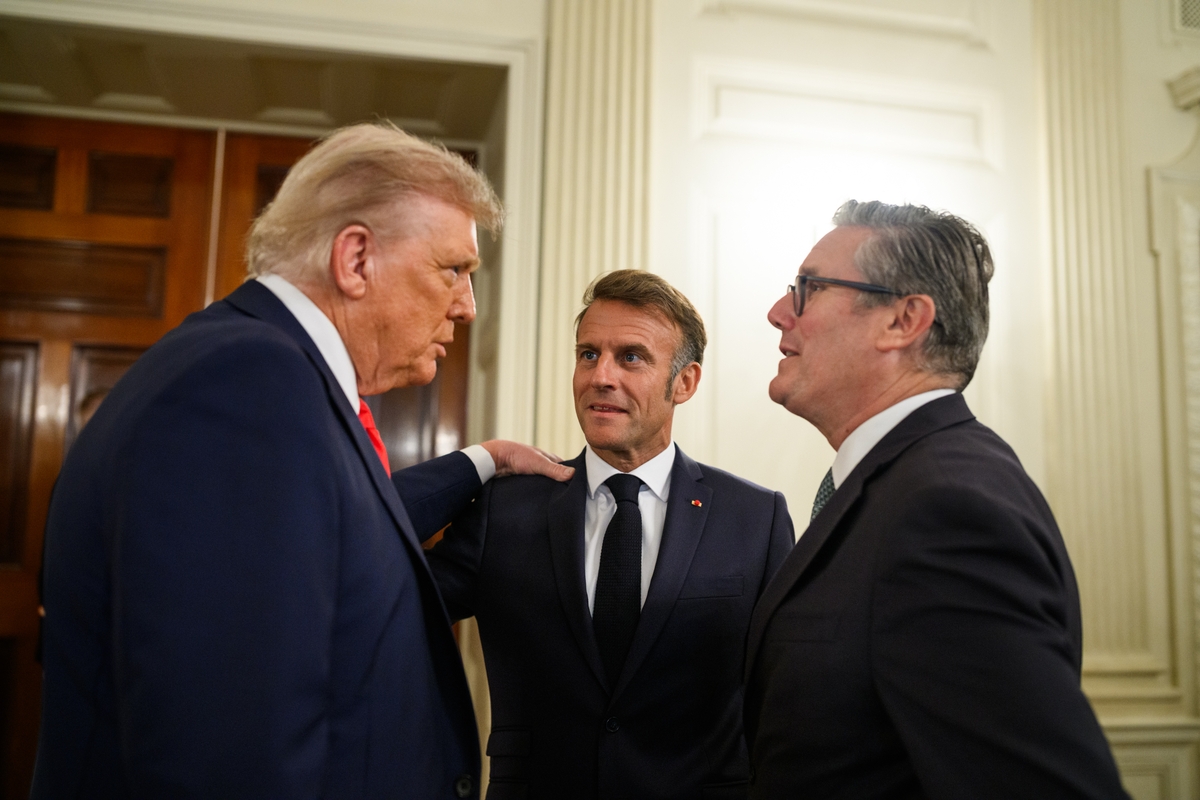
Official White House Photo by Daniel Torok. Rawpixel.com
The week-long bombing of Iran has not worked out as Trump wanted it. The assassination of the supreme leader, Ali Khamenei, has not led to the regime change that he claimed was the object of the war. The Iranian attacks on countries stationing US bases have taken many commentators by surprise, not least because Trump claimed that most of its missiles were destroyed last year. There has not been an uprising of the Iranian people that he desired, despite widespread unhappiness with the government. Not least because many Iranians will fear outside intervention more than their present situation.
The immediate consequences of the war are plain to see: terrible death and destruction to the Iranian people; an Israeli plan for greater Israel, beginning with invasion and bombing of Lebanon; infrastructure destroyed across the Gulf; rising prices of oil and gas; and the drawing in of countries far away from the Persian Gulf and Arabian Sea. The illegal and criminal nature of this attack is also clear. Over 100 Iranian sailors died after their ship was torpedoed off Sri Lanka, following their participation in international naval exercises. Over 160 girls bombed in their school in southern Iran. Whole districts of Beirut forced to evacuate as Israel bombed.
Britain is complicit in this war. US B-1 bombers have now landed at Fairford base in Gloucestershire, from where they will conduct missions to bomb Iran. Britain’s bases, intelligence, and logistics across the Middle East will be used to aid the Israeli/US onslaught, just as it has done throughout the Gaza genocide. Keir Starmer and the British government obviously regard the war as illegal, and initially refused use of British bases in the operation presumably on these grounds, but last week agreed to the use of Fairford and Diego Garcia.
Not that it did him any good. Trump has denounced him as ‘no Churchill’ and put out an extraordinary post in response to news of British aircraft carriers being sent to the Gulf:
“That’s OK, Prime Minister Starmer, we don’t need them any longer – But we will remember. We don’t need people that join Wars after we’ve already won!”
Trump’s contempt for Starmer has been reinforced by Tony Blair arguing that he should have agreed the use of bases from the beginning. So Starmer is being publicly humiliated by a president who far prefers Nigel Farage, and who is demonstrating the fallacy of the ‘special relationship’.
Across Europe, there is turmoil over Trump’s actions, with very different approaches from different countries. This reflects the huge strains on the once united European governments over war, armaments and the cost of ‘defence’ spending. Spain’s prime minister Pedro Sanchez is an outlier, describing the war as an “extraordinary mistake”. The Italian far-right prime minister has also been lukewarm, and the government has said the US hasn’t asked for the use of Italian bases.
On the other hand, the German chancellor, Friedrich Merz, has been much more fully behind Trump. When the latter attacked Britain and Spain for their reluctance or refusal to sign up to the Iran attack during Merz’s White House visit, he sat silent. In the last week, he has also downplayed the importance of international law in relation to Iran, a fairly amazing thing for a German politician to do, given its history.
A European Union which survived the end of the Cold War is now under increasing pressure over Trump’s behaviour in his second term, in particular the erratic gangster imperialism, the attempts at regime change in Venezuela and Iran, and his demands that Europe shoulders more of the costs of its defence. There are already divisions over the Ukraine war, with the US more keen on a settlement with Russia, and Britain and France, along with Poland and the Baltic states, keen to continue the war and generous in providing funds to do it. While in general the EU has been very supportive of Israel in its genocidal onslaught on Gaza, now some of its states fear that the attack on Iran will give Israel even more power in the region and set it on flames. They also fear the already severe economic consequences of this war.
So the EU and British leaders are in a deep bind – and all the contradictions of the situation are coming to the fore: the ending of the post-Cold War order, the growing economic crisis, the authoritarian ‘solutions’ to the ‘migrant crisis’. But these contradictions can be turned to the left’s advantage. There is widespread opposition to this war, as shown by protests across the US, in Europe and here in Britain where tens of thousands took to the streets on Saturday. Palestine solidarity remains very strong.
Working-class people are going to suffer in terms of instability across the world, in the rise in the cost of living through energy and food prices, and in lost lives through direct war or the spread of terrorism. We need organisation against war which also challenges the attacks on us at home. That will need to oppose all the rulers who, whatever their differences, will unite to make us pay.
Source: Counterfire