
US President Donald Trumps continuing war with Iran has now spread to involve Yemen’s Houthis whose recent successful offensive means that Iran and its allies now dominate the Middle East’s two major regional energy chokepoints: Bab al-Mandab and the strait of Hormuz.
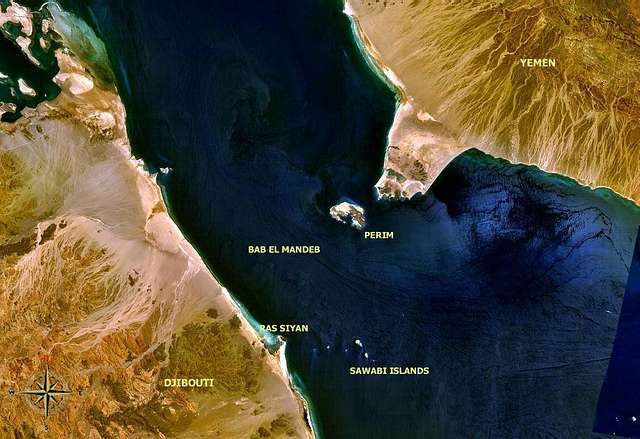
The Houthis recent entry into the conflict saw their forces advance along Yemen’s Red Sea coast, seizing a strategic port city and several islands that gave the militia control over the Bab al-Mandab strait, a vital waterway for energy shipments and other global trade.
But the advance didn’t stop there. Beyond the Red Sea coastline, the Houthis have advanced into two provinces in Yemen’s eastern region, which they did not previously control and which are home to the country’s largest oil and gas fields. Those areas are nominally under the control of Yemen’s internationally recognized government, which is supported by Saudi Arabia. If the Houthis can capture those regions, it would be their biggest territorial advance in more than a decade.
These actions have reignited the conflict with Saudi Arabia begun by the Saudis 11 years ago but enjoying a ceasefire since 2022.
The Houthis have banned Saudi ships from crossing the Red Sea through the Bab al-Mandab strait, saying the ban would only be lifted when the kingdom removed its own blockade on Houthi territory. After Iran shut down the strait of Hormuz, through which a fifth of the world’s energy supplies transited before the recent war, Saudi Arabia was forced to move much of its oil shipments via its east-west pipeline to Saudi ports along the Red Sea. That exposed Saudi dependence on both the Hormuz and Bab al-Mandab waterways.
After announcing their blockade in July, the Houthis fired on several Saudi vessels in the Red Sea, forcing the kingdom to reroute a significant portion of its oil exports to Asia through a far longer and more expensive journey. That passage can take ships more than 30 days, and it involves transiting through the Suez Canal, the Mediterranean Sea, and around the southern tip of Africa, before finally reaching customers in Asia, who buy the bulk of Saudi oil.
Donald Trump, already embattled over the failure of the Iran war, is in absolutely no hurry to broaden the conflict. His administration has repeatedly said it will not actively militarily aid the Saudis, limiting support to intelligence sharing. Indeed Trump has been publicly saying he has no fight with the Houthis and that the Houthis have told him they want no conflict with the US.
So its been left to the British government to make vague promises of help to the Saudis.
Meanwhile, the Saudis have been trying to bolster their own alliances by making a military pact with Turkey and Pakistan, the so-called Macca Pact. But nothing has come of this in terms of direct aid in this conflict with the Houthis.
The effect of a prolonged Saudi conflict with the Houthis would be devastating, not least for the Saudis. The whole Saudi economic strategy of getting out of the oil producer monoculture by developing inward investment and tourism is, literally, going up in smoke as the Houthis hit a oil depot at Riyad’s international airport.
For the world economy it’s even more serious. With oil already at $100 dollars a barrel as a result of the closure of the Strait of Hormuz the threat of a massive cost of living hike is all too real as the second major oil and trade route in the Middle East is closed.
Even Republicans in the US are turning on Trump, now only 50 days out from the crucial midterm elections. If the MAGA base, and the wider electorate, do the same a lame-duck President facing the greatest military defeat since Vietnam may be what the end of 2026 looks like for US power.