
Last week, as drought was declared across half of England, the wholesale price of tomatoes rose by more than 60%. Lettuce is up by 90% and potatoes by more than 40%. Broccoli growers say their yield has halved and the June heatwave alone destroyed nine million
The worst is yet to come. The World Food Programme estimates that the ‘super El Niño’ brewing in the Pacific could push at least 49 million more people into acute food insecurity by the end of next year. With its dominance enforced by Washington’s war machine, fossil capital is driving the planet towards oblivion. Last year, the US produced more oil than any country in history. Now, the Trump administration has declared war on rival petro-states.
In March, oil fell on the people of Tehran. After illegal US–Israe
Since October 2023, Gaza’s environment has been a central target of the genocide. 40% of the land in the enclave previously used for food production had been destroyed by March 2024, while nearly one-third of Gaza’s greenhouses had been demolished. Nearly half of its tree cover and farmland had been destroyed, including through the use of chemical weapons like white phosphorus.
Ecocide in West Asia, however, has ensured record profits for the fossil fuel industry. Eight of the world’s biggest oil companies amassed profits of more than $90 billion in the three months which followed the beginning of Trump’s war on Iran. That means that amidst unprecedented turmoil in the global energy market brought on by immense human suffering, these corporations made more than $700,000 every minute.
This, of course, is without mentioning Venezuela, which hosts the world’s largest proven oil reserves. Having invaded Caracas and kidnapped Nicolás Maduro in January, the US has now taken over the Latin American nation’s energy industry. By the end of July, Washington had extracted $13 billion and deprived the people of disaster relief necessary to deal with the worst earthquake Venezuela had faced for over a century.
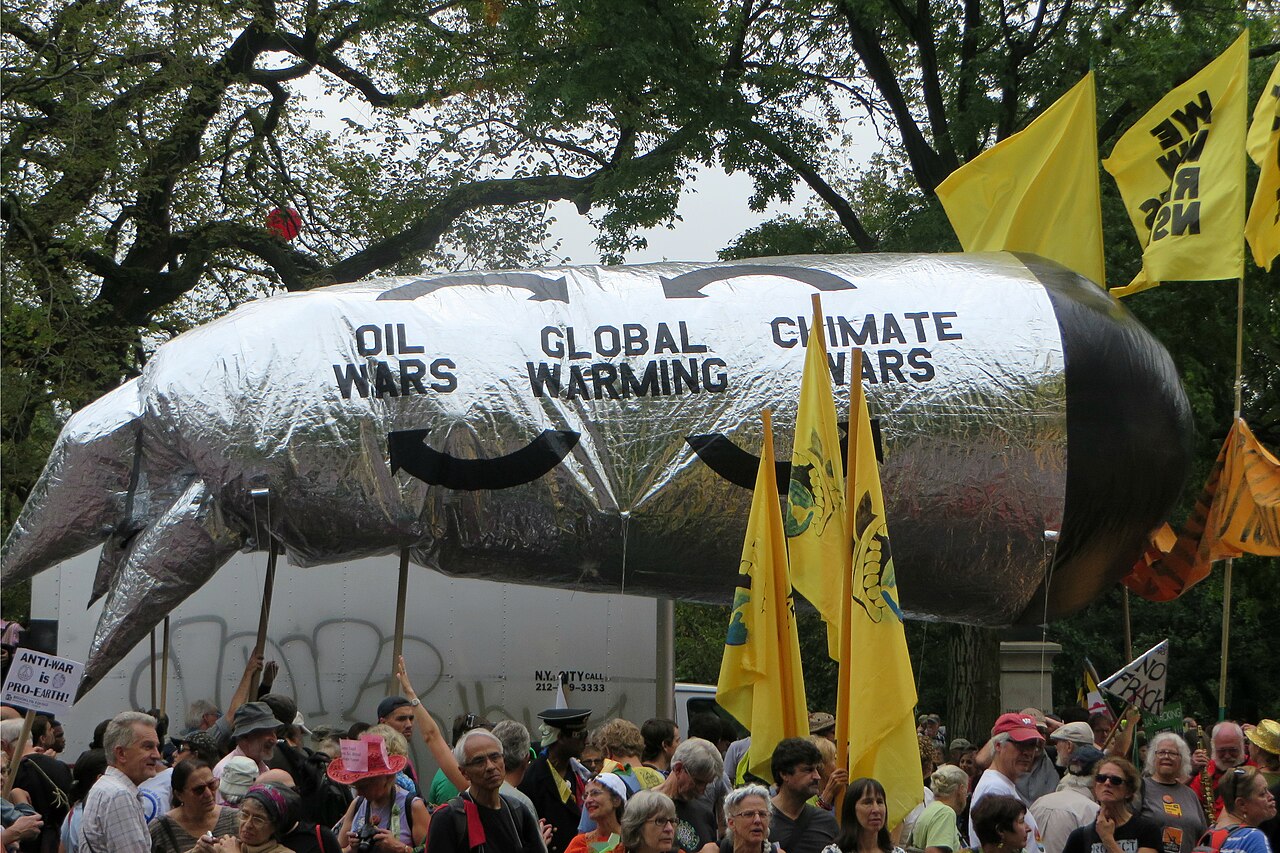
Fossil fuels underpin what remains of America’s waning hegemony, and Donald Trump is waging war to protect their profitability. From the overthrow of Mohammad Mosaddegh to the bombing of Baghdad, the White House has long recognised that its imperial strength is intimately tied to the question of who owns the world’s energy resources. This is the reality with which progressive forces must engage: the challenge of climate change is inseparable from the struggle against the military-industrial complex.
Today, despite climate-driven disasters reaching nightmare proportions, the world’s largest institutional emitter — the US military — is still not required to account for its emissions to the UN. The 1997 Kyoto Protocol set binding targets for greenhouse gas reductions but, after extensive US lobbying, exempted emissions generated by military fuel use. Even as Washington’s defence bill exceeds $1 trillion, the climate impact of the Pentagon’s 700 bases around the world is systematically ignored.
“We took special pains … to fully protect the unique position of the United States as the world’s only superpower with global military responsibilities,” boasted the Undersecretary of the State Departmentafter Kyoto. These efforts ensured that, three decades later, as delegates gathered for COP30 in Belém, Brazil in November 2025, they discussed all emissions-related topics bar one: War.
Donald Trump’s misadventure in Iran has already cost British households at least £221 in higher energy bills. For as long as the Strait of Hormuz — and now the Bab al-Mandab — remain closed, this figure is sure to rise. With the added pressure of climate-related food price spikes, the country is spiralling towards a new affordability crisis at a time when almost half of all British adults have less than £25 in spare cash at the end of the week.
At home and abroad, the working-class cannot afford to prop up fossil capital’s violent exploits. That’s why 10 trade unions last week urged the new Prime Minister to extricate Britain from Donald Trump’s war in West Asia. In a letter to Andy Burnham, general secretaries representing more than 2.3 million workers urged him to bar US planes from using RAF bases for airstrikes on Iran. “Without an end to the war,” they wrote, “there will be no end to this cost of living crisis.”
Such coordinated action is welcome and points a way forward not just for the anti-war movement, but climate campaigners too.
Source: The National