
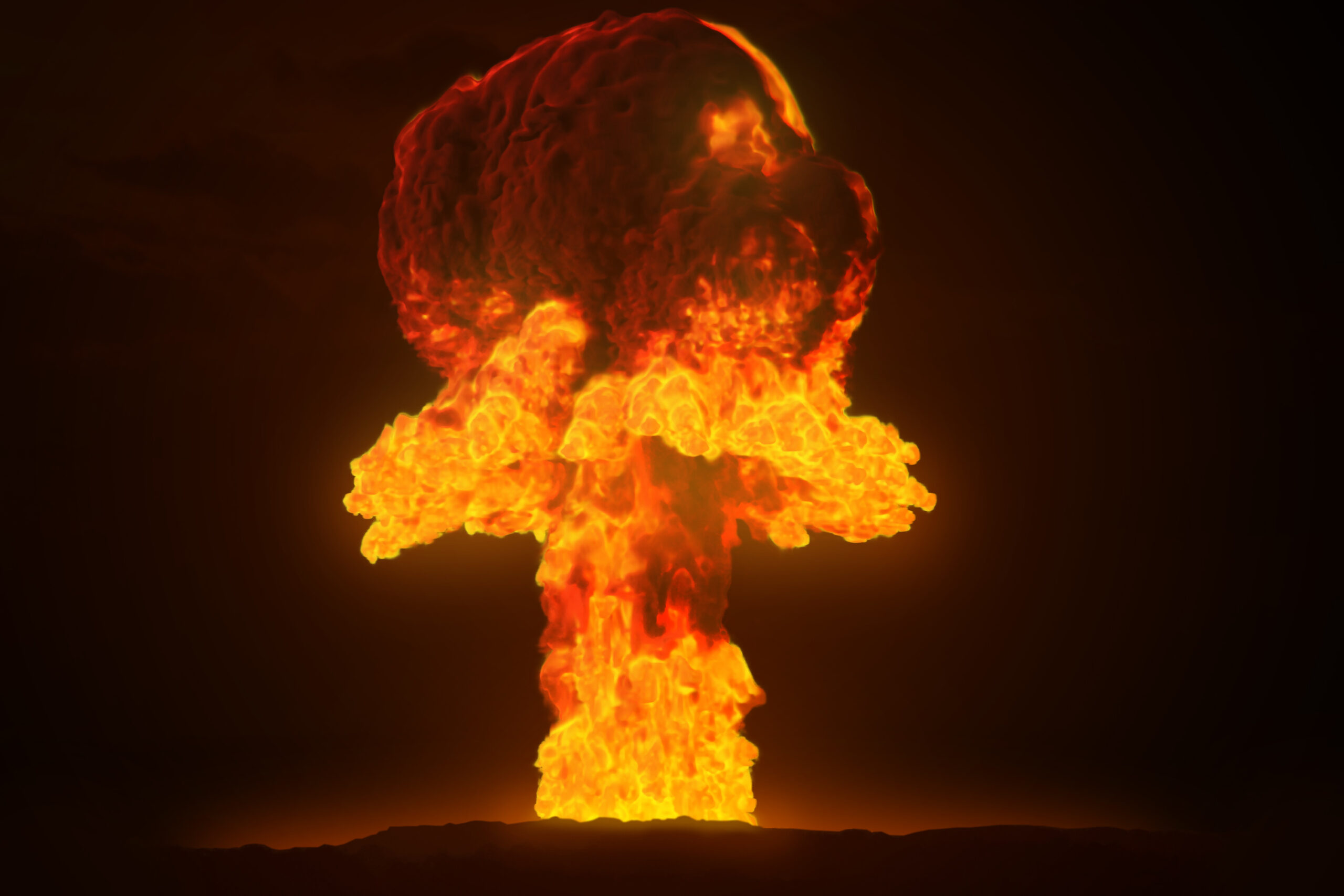
In August, peace groups across the country commemorated two crimes against humanity committed by the United States in 1945. Crimes against humanity are defined as inhumane acts, widespread or systematic attacks directed against a civilian population. Unlike war crimes, they can occur in peacetime as well as war. The atomic bombing of the Japanese cities of Hiroshima and Nagasaki, on 6 and 9 August, were two such crimes. By 1950, 340,000 people were estimated to have died as a direct result. Second and third generation atom bomb survivors, the hibakusha, continue to suffer to this day.
Nuclear realities in 1945
The US still claims these bombings resulted in the surrender of Japan and ended World War II sooner and with less loss of life than would have otherwise been the case. This is a convenient hypothesis which denies what American historian Gar Alperovitz established in his seminal work on the atomic bombings, and is reinforced by generations of so-called revisionist historians who continue to challenge US government orthodoxy.
By 1945, the Japanese military had suffered a series of defeats culminating in the US capture of Okinawa in April. By now, the Japanese Emperor was losing confidence in the possibility of a military victory. In June, he announced his intention of ending the war and the Supreme Council for the Direction of the War (the war leadership commonly known as the Big Six), agreed to seek assistance from the Soviet Union in opening negotiations with the Allied Powers.
… and today
The world is much changed since 1945, but the possibility of nuclear war has never been higher. Eight more states have joined the US: Russia became a nuclear weapons state in 1949, Britain in 1952, France 1960, China 1964, Israel around 1967, India 1974, Pakistan 1998, and North Korea 2006.
Their nuclear arsenals have reached staggering proportions. SIPRI, the Stockholm International Peace Research Institute, estimates the total number of nuclear warheads is now at around 12,000, and each has considerably more destructive power than the bombs dropped on Hiroshima and Nagasaki.
A new nuclear arms race is already underway, driven by the nuclear weapons states competing to keep ahead of the pack. In the past five years, the nine have spent a total of almost half a trillion dollars maintaining and upgrading their nuclear arsenals, with minimal public scrutiny. In 2025, global nuclear spending rose 19% on the previous year. Nuclear weapons projects are long term projects; governments will shoulder the costs for years or even decades ahead.
The notion that increasing the world’s nuclear capacity makes us safe is arrant nonsense. Proliferation makes nuclear conflict more likely, not less. Statistics demonstrate the magnitude of nuclear risks today, but they cannot begin to convey what it’s like when a nuclear bomb is detonated. What follows is a brief description of what happens when a nuclear bomb is dropped on a large city – not nuclear war, just one explosion in one city. The words are those of the International Red Cross and Red Crescent, not mine.
When a nuclear bomb explodes
The first phase lasts less than a second. A ball of fire hotter than the sun, evaporates everyone and everything within the epicentre of the explosion.
The second phase follows moments later. A shock wave moving faster than the speed of sound, creates winds like hurricanes and tournedos which people and buildings are unable to withstand. Petrol stations and other storage facilities explode and fires spread. The heat burns everything within a 500 square kilometer radius that is capable of burning – plastic, wood, hair, skin.
Millions of people with serious injuries and burns will die in agonising pain within hours or days, with little if any help. Medical centres have been destroyed along with other structures, and medics have been killed and injured just like the rest of the population.
The third phase takes place over the next few days. Black rain falls covering everyone and everything with sticky radioactive dust. Every breath every survivor takes poisons their lungs. The worst affected by this will die in hours or over a few days. Many more will die slowly in the weeks, months, and years ahead. Atom bomb survivors will live with extensive burns and succumb to cancers; and children will be born with shocking birth defects.
What no government ever tells you
After a nuclear attack, you’re on your own. The damage doesn’t end when the fires burn out and the smoke clears. There is no water to drink, no transport to evacuate you from the area, no medical supplies, and the little food that remains quickly runs out. Help from outside is hampered by conditions in the city, and emergency workers are in danger if they get too close. Nearby hospitals are under-equipped and overwhelmed by the sheer number of patients.
A nuclear explosion is like every natural disaster happening at once. No serious humanitarian response is possible. There is no way to help the victims of a nuclear attack.
Commemorating Hiroshima and Nagasaki is more than remembering an historic war crime. It brings home what a nuclear exchange would mean today; and reminds us that the chances of that happening are growing.
Today’s nuclear stakes
Military engagements in Ukraine and Iran both involve nuclear weapons states. Both have been testing grounds for the use of new technology in warfare, including unmanned weaponry. Both conflicts are spreading beyond their original combat zones:
In the case of Ukraine:
In the case of Iran:
Britain is part of a new nuclear arms race
In 2025, Britain overtook Russia to become the third highest nuclear spender after the US and China. The UK is expanding its nuclear programme beyond the sea-based Trident system, and developing the RAF’s nuclear capability. As of last year, Britain’s nuclear programmes accounted for around 14% of the Ministry of Defence (MoD) budget.
The claim that Britain’s nuclear weapons makes us safe – the myth that this government like every other before it continues to peddle – is the opposite of what’s actually going on. Stationing US nuclear weapons at RAF Lakenheath and buying US nuclear capable fighter jets for RAF Marham make us a primary target in a future war in Europe and beyond.
Neither does military spending help grow the economy or create more jobs. The arms manufacturers are the beneficiaries, not the workforce – BAE Systems, Rolls-Royce, Babcock International, and Lockheed Martin UK which design, manufacture, maintain and refit Trident submarines and supply Trident’s ballistic missiles.
Hope, what hope?
When Andy Burnham became Prime Minister, he promised hope and a new direction for Britain.
Allowing US war planes to fly from Fairford to attack Iran doesn’t bring hope. It extends a war that has already spread. Suppling Ukraine with weapons doesn’t bring hope. It extends a war which the people of Ukraine and Russia don’t want.
Nuclear weapons are accumulated and wars fought in the interest of the establishment not the interests the working class. Burnham’s government cannot bring real change to the lives of the majority if he remains wedded to the war fighting policies of previous governments.
Meeting Nato’s spending targets robs Burnham of the resources for projects that will bring the sort of changes that improve the lives of the majority. Expanding Britain’s nuclear capability and spending more on the military puts the government at the centre of a 21st century arms race.
Which gives you most hope?
Source: Labour Outlook