
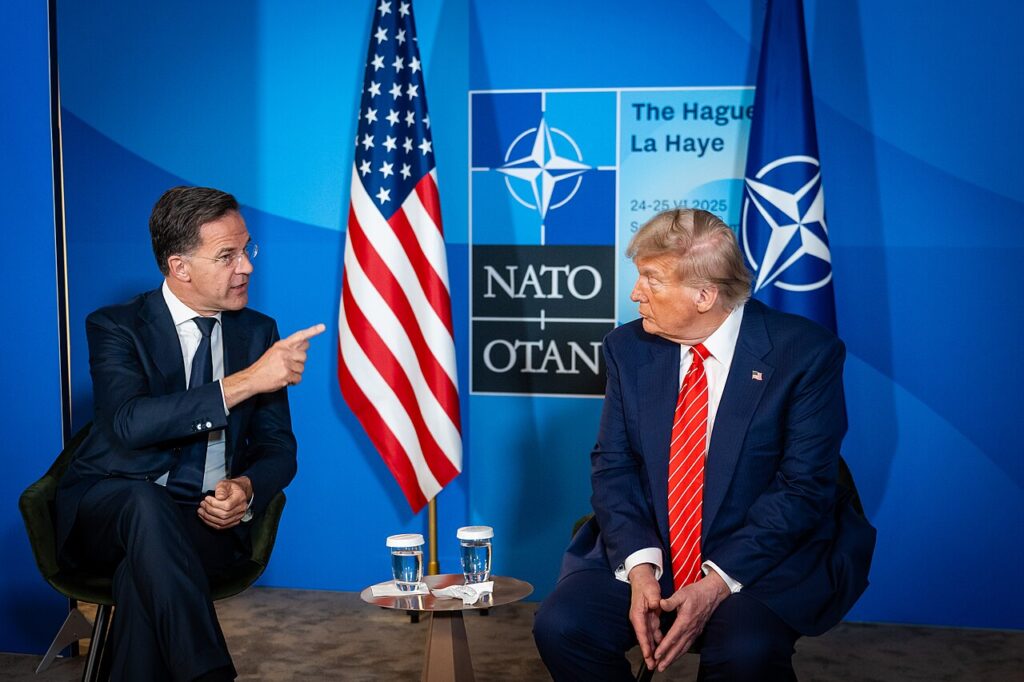
‘Applying tariffs… on Nato allies is completely wrong. We will of course be pursuing this directly with the US administration.’ That must have been hard for Keir Starmer to say, given his obsequious relationship with Donald Trump. But he had little choice after Trump responded to the token deployment of European, including British, troops to Greenland by slapping 10% tariffs on goods exported to the US.
Trump’s increasingly vociferous demands to be able to take over Greenland, supposedly in the name of US security, has sent Starmer and the EU leaders into crisis. While they were forced to criticise this move and to say that the future of Greenland was for it and Denmark to decide, they remain committed to negotiations with Trump, and to supporting his foreign policy overall. Unfortunately for them, Trump has them in his sights. The biggest threat to them is the US president, and they don’t realise it. While Starmer claims a special relationship, he should pay attention to what US foreign policy is saying.
Much has been written about Trump’s National Security Strategy published late last year, which talked about the US reasserting its control of the western hemisphere and reasserting what it calls ‘The Trump Corollary’ to the Monroe doctrine. But less remarked on is its view of Europe and Trump’s support for far-right parties based there, rather than for centre or social democratic parties like Starmer’s.
The larger issues facing Europe include activities of the European Union and other transnational bodies that undermine political liberty and sovereignty, migration policies that are transforming the continent and creating strife, censorship of free speech and suppression of political opposition, cratering birthrates, and loss of national identities and self-confidence. Should present trends continue, the continent will be unrecognizable in 20 years or less. As such, it is far from obvious whether certain European countries will have economies and militaries strong enough to remain reliable allies.
The document continues:
American diplomacy should continue to stand up for genuine democracy, freedom of expression, and unapologetic celebrations of European nations’ individual character and history. America encourages its political allies in Europe to promote this revival of spirit, and the growing influence of patriotic European parties indeed gives cause for great optimism.
Trump’s new year has begun with a bang: the kidnap and forced imprisonment of the president of Venezuela, following extensive bombing of the country; promises of similar attacks on Cuba; so far unfulfilled threats to intervene in Iran; the formation of the imperialist ‘board for peace’ in Gaza; and his bellicose stance over Greenland. The aim is to reassert US hegemony not just in the western hemisphere – where its fear is that Chinese investment is challenging the US in a variety of fields – but to maintain it across the world.
The US has no intention of closing its base in Ramstein in Germany, or Lakenheath in Suffolk, or any of the others which play a key role in maintaining US power, including its nuclear capability. But it wants to push ever more costs of ‘defence’ onto the European powers, and it also is more ambivalent about Nato than its European allies. Indeed, Trump said recently that Nato would not defend the US if push came to shove. (Not actually true: Nato joined in the war on terror after 9/11 as it considered the terrorist act an attack on all its members.)
The attack on Greenland is about its strategic situation in a region where the Arctic ice is melting through global warming, allowing more routes across the Polar region, and thus more potential conflicts with China and Russia. If Trump goes ahead and annexes it or invades then it will effectively mean the end of Nato, whatever is said publicly, given that Denmark is a loyal member of the alliance.
What conclusions can we draw from this? Firstly, that there are growing economic threats of a trade war in economies which are already in trouble, not least in Britain where unemployment is rising and living standards have not recovered in nearly 20 years. Already, French president Macron is demanding the EU respond with tariffs against the US. Secondly, the response of Starmer, Macron, Merz and co to the threats to Greenland will be to further push their ‘warfare not welfare’ agenda – that Europe must rearm because it cannot rely on the US to defend it against Russia. This will be tied to renewed determination to prolong the war in Ukraine and to bolster the ‘coalition of the willing’ of British, French and other European troops for a future ‘buffer zone’ there.
Thirdly, we must recognise that the imperialist powers might be more fragmented but are deadly in their intentions. The attacks on Greenland are one example – and the people of Greenland must have the right to self-determination not just from the US but from Denmark if they so choose, as many do. Another example is in the Middle East. Gazans are being starved and frozen, children are still dying, Israel is encroaching ever more on its territory. Trump’s solution? The gruesome Board of Peace crammed with billionaires, US politicians, and our own homegrown war criminal, Tony Blair. La lotta continua.
Source: Counterfire