
Appearances can be deceptive: on the surface it looks as if the war in the Middle East is between Iran and the US and Israel. But in reality the key conflict is between US President Donald Trump and the world economy.
Trump thought the contest would be a standard military engagement in which US and Israeli military superiority would destroy the Iranian regime in short order, avoiding another ‘forever war’ and delivering a quick victory.
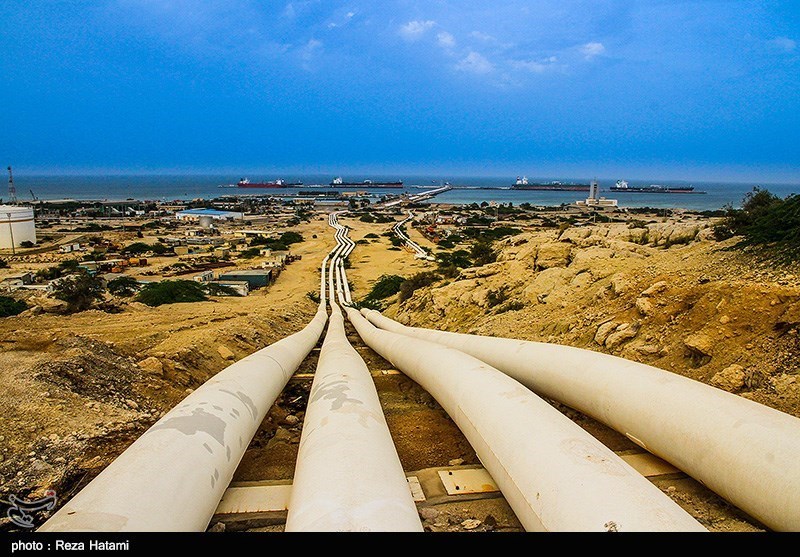
But Iran is fighting an asymmetric war in which its ability to close the Straits of Hormuz and target energy infrastructure throughout the region is transforming the conflict into one between Trump and the world economy.
Only yesterday the boss of Shell, Europe’s largest oil company, warned that Europe could face fuel rationing as early as next month.
That kind of damage is already hitting South and South East Asia.
Jet fuel has now doubled in price, diesel will be next, and petrol could be seeing similar rises by early summer.
Everything depends, as the establishment think tank Chatham House has pointed out, on how long the war lasts. If it goes on much longer oil prices, which before the war were about 75 dollars a barrel, could remain over 100 dollars a barrel for a long period.
The oil prices have proved highly reactive to news about the war. They surged when the Straits of Hormuz were first closed, surged again when Trump threatened to ‘obliterate’ Iran and when Israel attacked the South Pars energy field, and they have fallen back whenever Trump has talked of negotiations with Iran.
So now Trump is caught between a rock and a hard place. Fight on and the damage to the world economy becomes unsustainable. Quit and US imperialism suffers a defeat more serious than Iraq, and arguably more serious than Vietnam.
Trump is trying to negotiate a deal that can be claimed to be a victory while constantly bellowing about air-superiority over Iran. The problem is that the massive US-Israeli bombing, for all the death and destruction it has rained down on Iran, has not broken the regime or lifted the blockade of the Straits of Hormuz.
So Trump is also preparing escalation of the war. He has publicly threatened to bomb Iran’s energy infrastructure, but this may worsen the problem he faces by jacking up the oil price again. And if Iran responds by attacking US energy facilities in the Middle East that danger is doubled.
Consequently, Trump is also looking at the possibilities of a ground operation. This is highly unlikely to be an invasion of the whole of Iran. Iran is the size of Western Europe and the US simply does not have the means available for that kind of invasion, and Trump does not have the political capital either at home or internationally to sustain such a huge military undertaking.
So the 4,000 marine and airborne troops that seem to be mobilised are likely headed for Kharg Island in the Straits of Hormuz and perhaps for the Iranian coast that faces the island.
Whether this would do anything more than paint a target on the back of the troops deployed is an open question. It is certainly unlikely to calm the oil market or open the Straits of Hormuz in the short run.
Time is not on Trump’s side. The markets are closing in on his position, and so is public opinion.