
The meeting last Wednesday between US President Donald Trump and Israeli prime minister, Bejamin Netanyahu, in the Oval office was a very strange affair.
The meeting was scheduled to take place a week later than it did, when Netanyahu was in town to address the American Israel Public Affairs Committee (AIPAC) convention; the main Zionist lobbying group in the US. It was Netanyahu who asked for the meeting to be brought forward, it seems because of his concerns over US-Iranian negotiations over the Iranian nuclear programme.
There was no press conference afterwards and only one picture was released, by Israel, of Trump and Netanyahu shaking hands. It was extremely muted compared to the usual love-ins between Israeli premiers and US presidents, Republican or Democratic. Trump normally loves going on camera, but not on Wednesday!
Netanyahu did give a press statement at Dulles airport, but in Hebrew. He made it clear that he had disagreed with Trump continuing talks with Iran over its nuclear programme:
“He wanted to hear my opinion. I will not hide from you that I expressed general scepticism regarding the quality of any agreement with Iran.”
Netanyahu spelt out that he wants the US to demand that Iran cease all uranium enrichment, even for medical purposes, the scrapping of its ballistic missile arsenal and an end to support for groups like Hezbollah, Hamas and the Houthis.
Those demands were raised by Trump at the end of last year, and in January, but he now seems to believe that the ongoing US-Iran talks can achieve a deal on the issue of its nuclear programme.
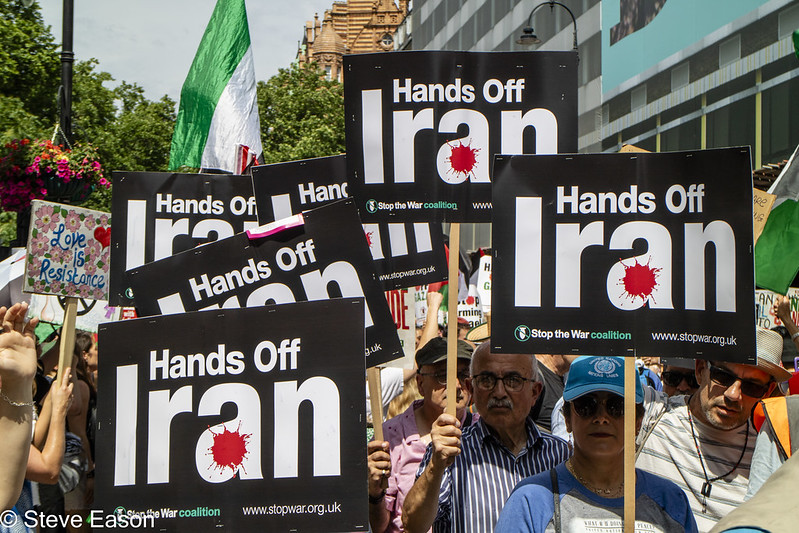
Perhaps Washington realises that Tehran is simply not going to accept any of that. It would mean surrendering her sovereignty and rendering her defenceless against the one nuclear power in the Middle East, Israel.
So, on Wednesday Trump’s Truth Social statement indicated his insistence that talks will continue despite Netanyahu.
We should be careful here. The US has been continuing to build up its military forces in the Middle East, sending another aircraft carrier to the Persian Gulf, even as Trump pursues negotiations with Tehran.
But perhaps, and this is me guessing, Trump realises a war with Iran will not be an in-out affair like the raid to capture Venezuelan president, Nicolas Maduro. That’s what Trump likes, a quick operation which ends with him announcing victory. He is unlikely to get that in Iran. Their new nuclear operations centre is being built deep inside a high mountain which the bunker busters cannot penetrate. Plus, there is no way he will want US troops on the ground in Iran.
His poll ratings are already appaling and mid-term elections near. Another ‘forever war’ is the last thing the Republicans need.
In January, it was Netanyahu who told Trump Israel was not ready for a second war with Iran and he even asked that there should be no attack on Iran. Why? Quite simply, back in April 2025, Israel’s Iron Dome missile defence programme failed to stop Iranian ballistic missiles hitting their targets inside Israel and it is in no better shape now.
The 12 Day war started well for Israel after the success in launching drone and missile strikes from remote areas inside Iran, having had them brought in by Mossad with the help of Iranian and Kurdish groupings. Prominent military leaders, nuclear scientists and politicians were assassinated.
Trump attacked the Fordow Uranium Enrichment Plant, the Natanz Nuclear Facility, and the Isfahan Nuclear Technology Centre with fourteen GBU-57A/B MOP ‘bunker buster’ bombs carried by B-2 Spirit stealth bombers, and Tomahawk cruise missiles fired from a submarine.
That was the extent of Operation Midnight Hammer. Trump declared Iran’s nuclear programme was ‘obliterated’ (it wasn’t) and called off any further attacks leaving Israel to carry on alone.
Once Iran recovered from the surprise – remember that the US attacked on the Friday before renewed Iranian-American talks were set to resume on the Monday, convincing Tehran an attack would not happen – it began drone and missile attacks on Israel.
As the attacks went on, they became more effective, by-passing Israeli missile defences. The US had to intervene to provide protection but Iranian missiles still got through.
The attacks created panic and shock inside Israel, in a country which has never experienced such a thing. Netanyahu had to phone Trump asking him to broker a ceasefire.
Today, Netanyahu needed footage of him and Trump smiling together because of his domestic difficulties.
Elections are scheduled for late-October but his coalition risks breaking up in a growing crisis over the 2026 state budget, which requires approval by 31 March. A budget defeat would automatically trigger the dissolution of parliament, the Knesset, and elections would have to be held within 90 days — June date looks likely.
The ultra-Orthodox parties are crucial to Netanyahu’s governing coalition, but they have tied their support for the budget to maintaining their constituents’ exemption from compulsory military service, and they have pressed for passage of a divisive bill to enshrine it in law. Months of negotiations have failed to produce a compromise acceptable to both the coalition and the High Court, which has ordered enforcement against draft evasion. A compromise looks unlikely.
Netanyahu could find a way out of this. While Bibi’s fall would give Palestinians a boost, any change of government will not change anything fundamental for them.
The state of Israel is a pariah internationally and that impacts internally. That is a tribute to the international movement in solidarity with Palestine. We need to keep up the pressure, not least on the Starmer government.
And whether he was a Mossad asset or not, the more that comes out about Jeffrey Epstein’s close links with Israel has an impact, particularly in the USA.
It also impacts in the most unusual quarters. It seems Netanyahu flew to Washington to secure an attack on Iran. Trump said no. Now, of course, he can change his mind in seconds, but that’s what makes last Wednesday’s meeting interesting. Trump said no, for now at least. Netanyahu flew home knowing he doesn’t control the shots: bad news for an Israeli premier.
Source: Counterfire