
The joint Israeli/American assault on Iran is now in a stalemate, according to reports from CNN, the Wall Street Journal and other outlets.
US sources say the Iranian leadership is in disarray and won’t respond to its demands, while Tehran appears to be shifting to a harder position. The new supreme leader, Mojtaba Khamenei, who was wounded in an Israeli assassination attempt eight weeks ago, this week issued a strongly worded statement that Iran will maintain its control over the Strait of Hormuz shipping channel.
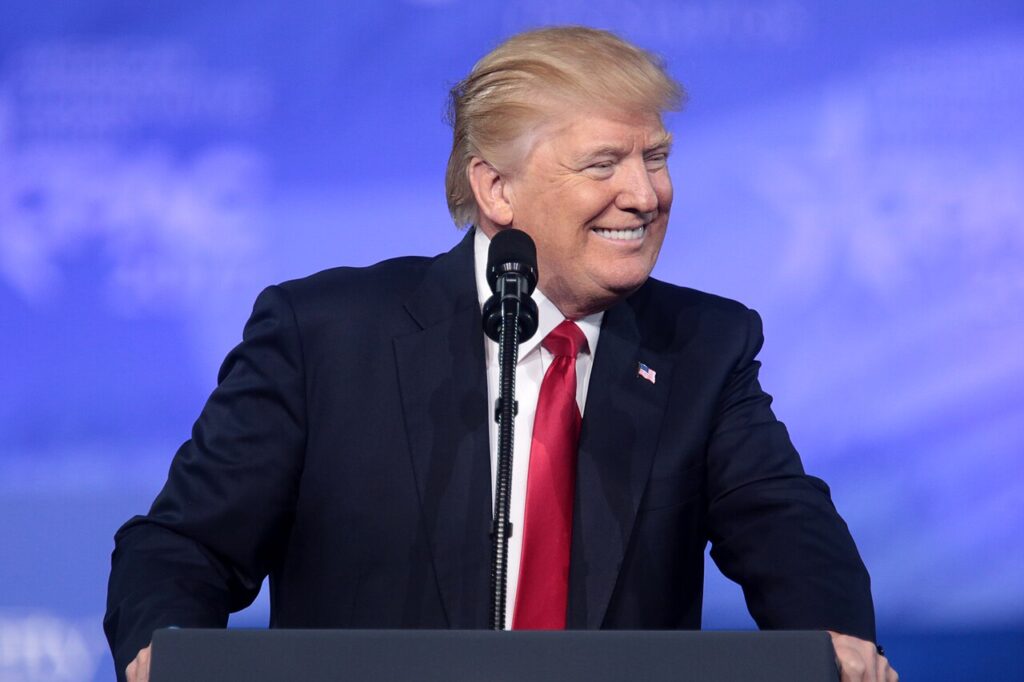
Meanwhile, the position of the US leadership is almost impossible to decipher. In between presenting himself as a celestial doctor, Rambo, or even Jesus Christ, Donald Trump threatens hell on earth for Iran one week, then a naval blockade the next.
One thing that is as certain as can be is that Israeli prime minister Binyamin Netanyahu does not want a ceasefire without total victory over Iran, which would mean regime change in Tehran, a secular demilitarised government and an end to all nuclear activities.
The chances of Netanyahu getting all that are remote, but he will do everything possible to prevent or at least hugely delay any ceasefire that promises less, at least up to Israel’s general election later in the year. In the meantime, he may be deeply frustrated by Trump’s failure to get on with the war in Iran, but he at least sees an opportunity to pursue his war against Hezbollah in Lebanon.
The Israeli Defence Forces (IDF) have repeatedly ignored the current supposed ceasefire, as have elements of the Hezbollah leadership, which has once again shown surprising resilience – including through the use of fibre optic-controlled armed drones that are difficult to counter, even with the IDF’s use of netting draped across military vehicles – while retaining a substantial arsenal of rockets and armed drones.
The IDF will avoid the long-term occupation of southern Lebanon, as that will involve many casualties as Hezbollah fights on its own territory, so there is little doubt that an air war will persist for months to come. The human costs for the Lebanese are terrible, with close to 4,000 killed and injured in the past two months alone and tens of thousands displaced from their homes.
Meanwhile, in Gaza, Israel has restricted nearly two million Palestinians to less than half of the already crowded territory, with the new delineation appearing on recently published Israeli government maps. Most of the land Palestinians have lost is horticultural, including previously productive glasshouse crops, making Gaza even more of an open prison than before the war.
Netanyahu will also see that the violence against Palestinians across the occupied West Bank continues. Since the Hamas assault on Israel 30 months ago, IDF and settler attacks have killed 1,151 Palestinians and injured 11,885, according to the Palestinian Health Ministry. A further 23,000 have reportedly been arrested; as of the start of last month, Middle East Eye reported that 9,560 were being held in Israeli jails, with 3,530 detained without charge.
Elsewhere, in the United States, the Pentagon reports that the eight-week war has already cost $25bn, although other sources report this as an underestimate. As far as Trump and those close to him are concerned, and especially with the Congressional mid-term elections due in six months, the sensible option would be to declare victory and withdraw their military forces post-haste.
That might have been possible a month or so ago, but it becomes increasingly difficult with each passing week. Tehran’s unexpected resilience and consequent survival mean any sudden declaration of victory will now be seen as just what it is: failure.
So, what are Trump’s remaining options?
The relevant political context is that in his second term, much more than in his first, Trump has filled the whole entourage of government with ultra-loyalists. For most of them, staying in post now is essential in preparing for a post-Trump world. Unusually, this extends to the Pentagon – meaning that where professional military might previously have been willing to counsel against overseas follies, now they will not.
Furthermore, the Pentagon has moved plenty of hardware to the region, including two amphibious warfare ships with US Marine Corps forces embarked. Right now, there are even three aircraft carrier battle groups within striking distance of Iran for the first time in decades. One is due to return to its US home port after an exceptionally long deployment, but another has recently transited from the Pacific to the Atlantic and could replace it.
Beyond these movements lies another element. This war is exceptionally good for the US defence industry. Billions of dollars are being spent on missiles, with very few Americans being killed or maimed. From the perspective of the military lobby, making profits without the ‘body bag’ problem gets you pretty close to an ideal war.
This is where one of Trump’s recent statements may have more than a grain of truth: this may well be a war with months yet to run. The global economic consequences would be considerable, and they also leave the possibility of a slide to a further devastating war.
In such a time, there is always the risk of an unintended escalation in violence, a useful acronym being AIM, which stands for the three happenings that can take a crisis to something far worse.
Accident: responding to a perceived threat which turns out to have been accidental;
Incident: misinterpreting an inconsequential event for something much worse;
Maverick: the action of an individual or group determined to act as it, or he, sees fit.
One of the rare but troubling aspects of the current crisis is that the ‘Maverick’ in this case just happens to be the president of the United States. For that reason alone, we have little option but to expect the unexpected while hoping that international mediation makes rapid progress.